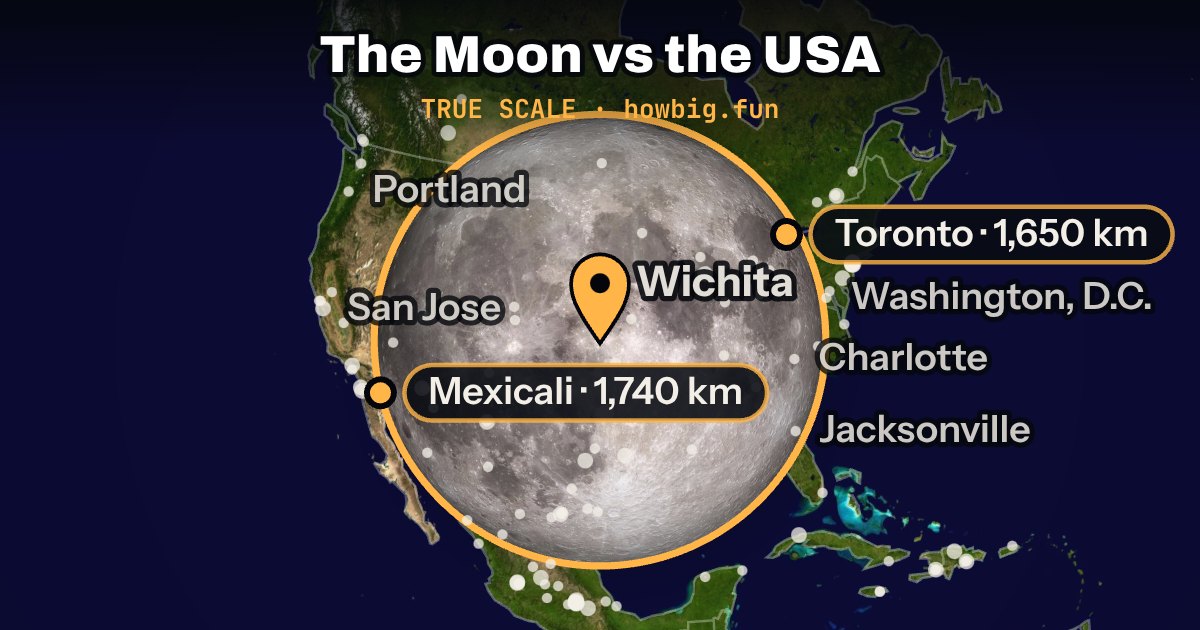
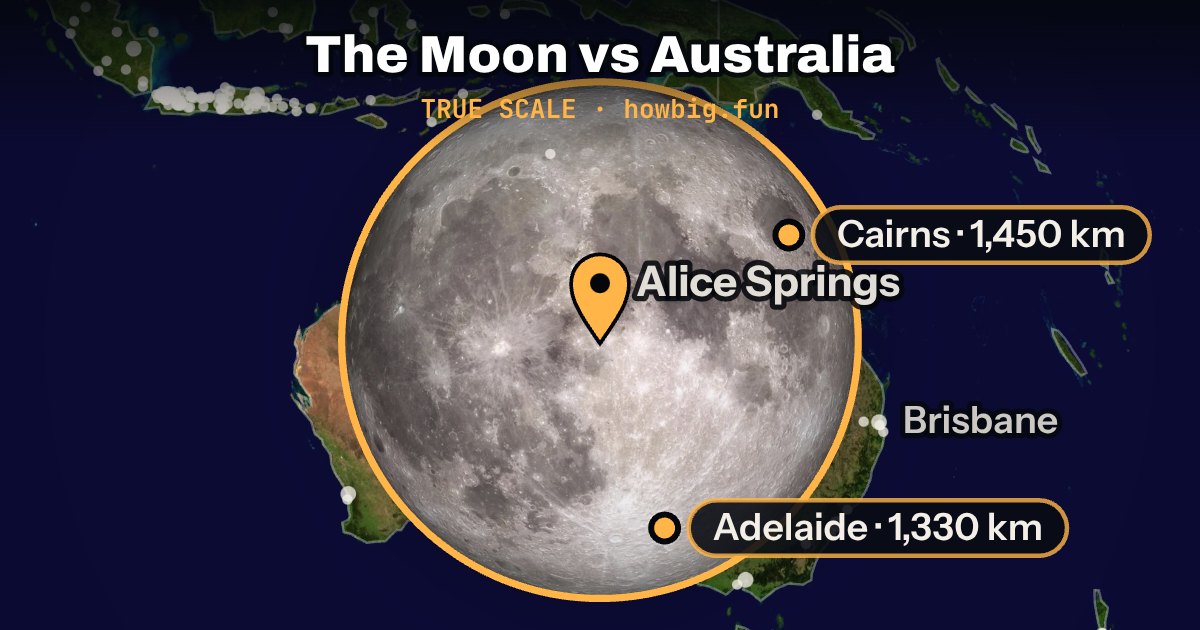
How big is Pluto compared to Russia?
Pluto is 2,377 km (1,477 mi) across, about 36% of the 6,580 km (4,090 mi) width of Russia (in a straight line from Kaliningrad to the Bering Strait). But Pluto is a ball. Its whole surface is 17.7 million km² (6.8 million mi²), only 4% more than Russia's 17.1 million km².
The numbers
| Pluto: diameter | 2,377 km · 1,477 mi |
| Pluto: surface area | 17.7 million km² · 6.8 million mi² |
| Russia: area | 17.1 million km² · 6.6 million mi² |
| Russia: width | 6,580 km · 4,090 mi (in a straight line from Kaliningrad to the Bering Strait) |
What the map shows
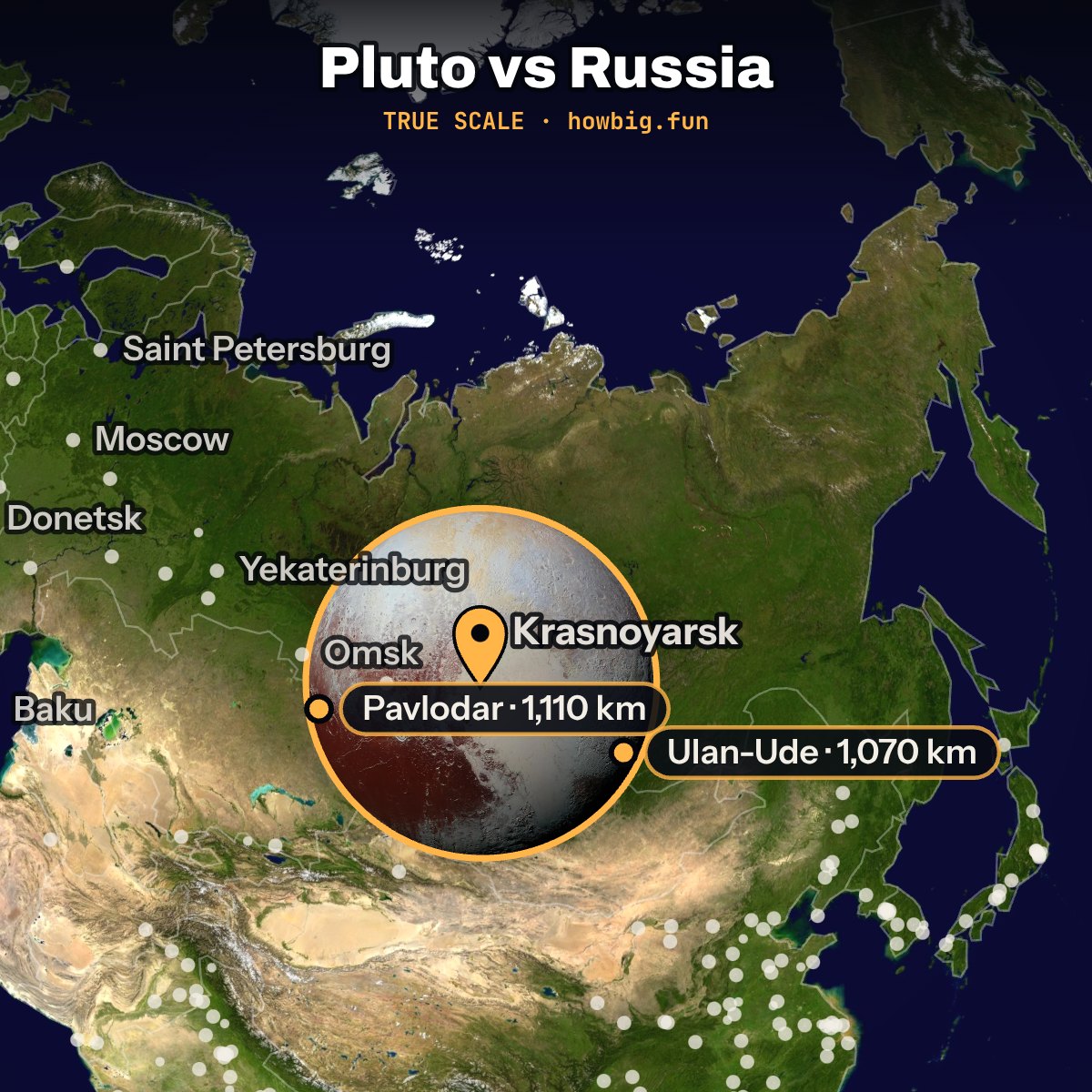
On the map, Pluto is dropped on Krasnoyarsk at true scale. Its edge reaches Pavlodar (1,112 km away) and Ulan-Ude (1,069 km away), and it covers 137 towns and cities of 15,000+ people, including Novosibirsk, Barnaul, Irkutsk, Novokuznetsk.
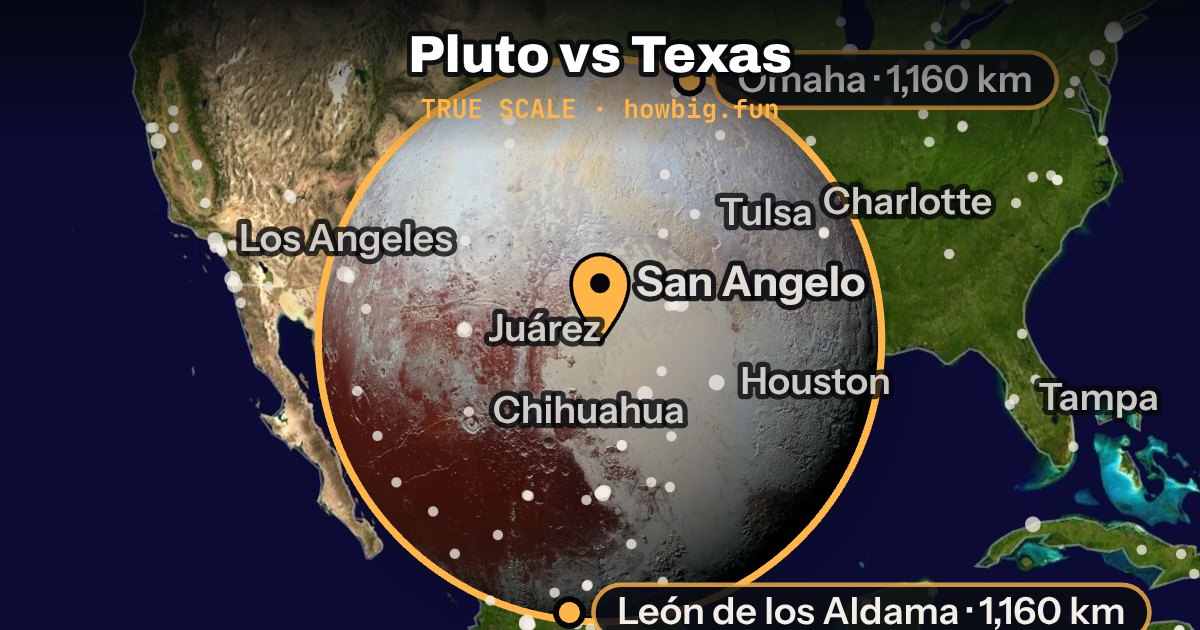
This one starts arguments, because both sides are right. Measured across, Russia wins easily: you would need almost three Plutos in a row to cross it. Peel off Pluto's whole surface and lay it flat, and it covers all of Russia with about 0.64 million km² left over, almost a whole Texas.
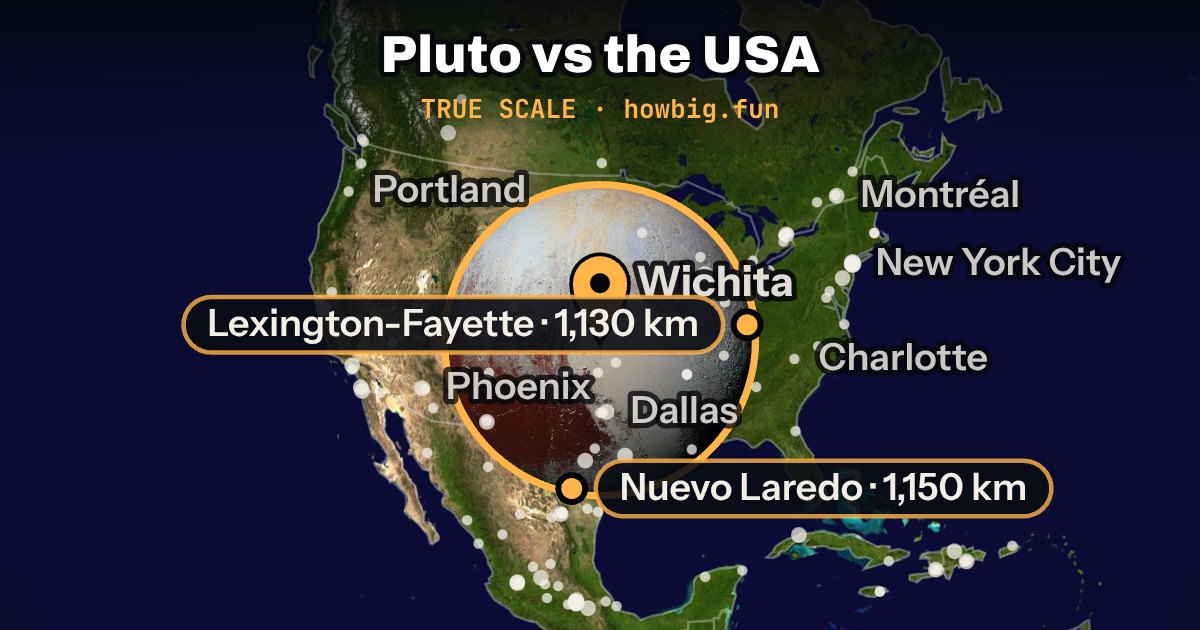
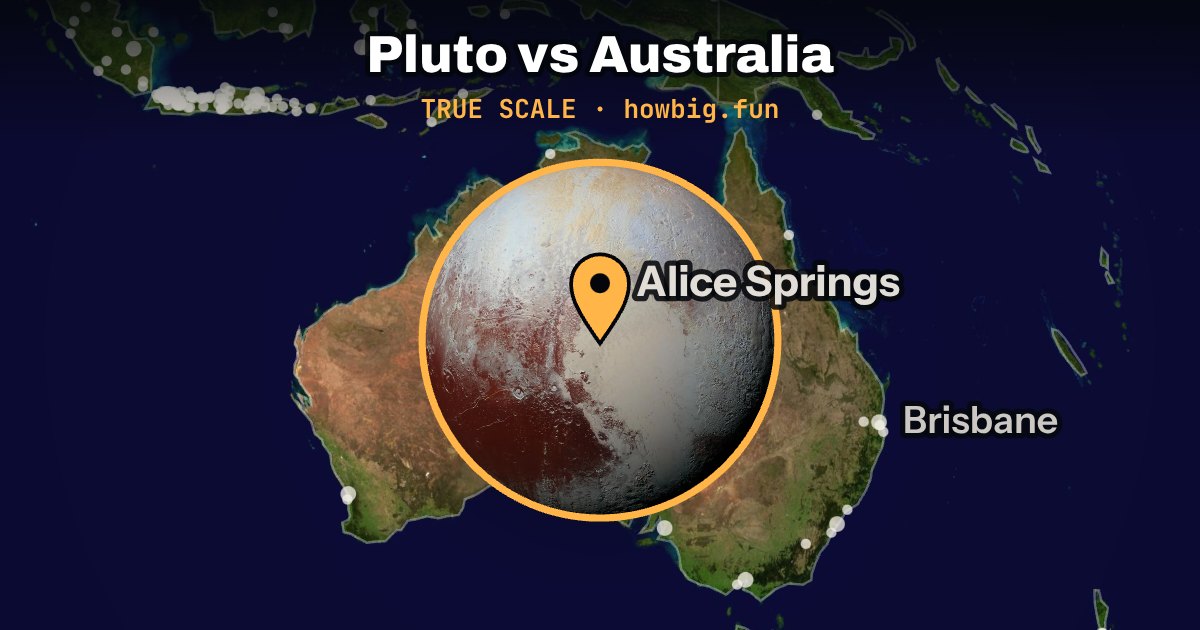
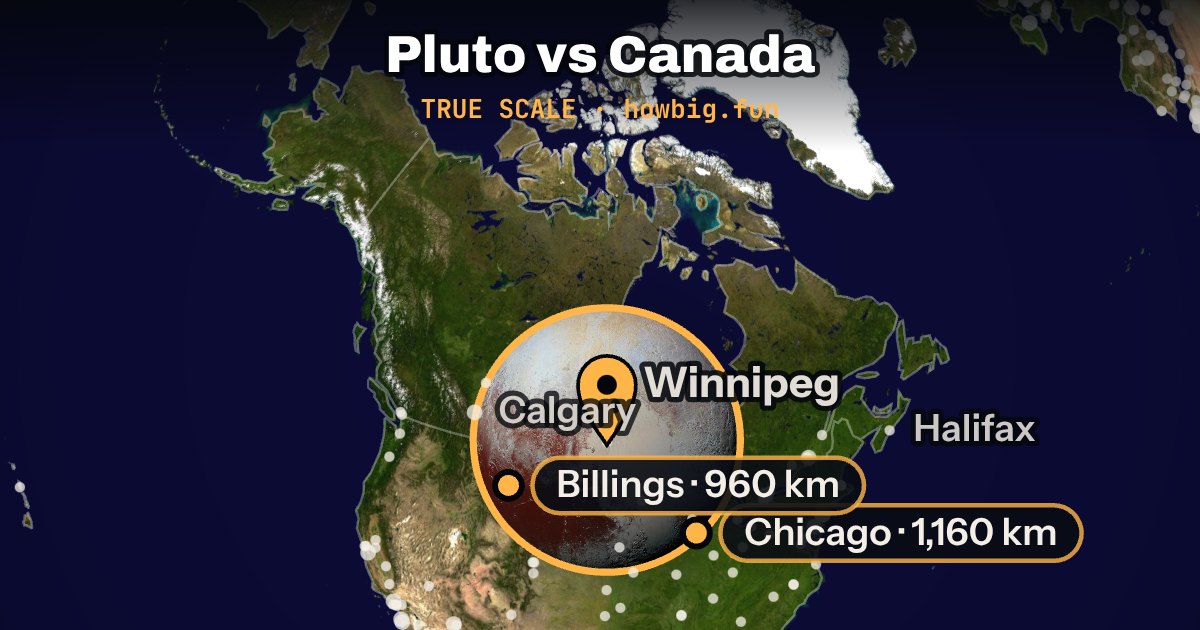
Why does this look different from the map on your wall? Most world maps (and Google Maps when zoomed out) use the Mercator projection, which stretches everything near the poles. Greenland, Alaska, Canada and Russia look far bigger than they are, and Africa looks too small. This map is drawn on a globe, so every shape keeps its real size.
Quick answers
Is Pluto bigger than Russia?It depends what you measure. Across, Russia is wider. By surface area, Pluto is bigger.